

TL;DR
No, crypto casino transactions are not truly anonymous. Transactions on public blockchains like Bitcoin, Ethereum, and Solana are permanently recorded and visible to anyone. Identity can be linked through exchanges, wallet on-ramps, or blockchain analysis tools like Chainalysis. Most casinos require identity verification (KYC) before large withdrawals. Assume traceability and choose regulated operators.
Can crypto gambling be traced?
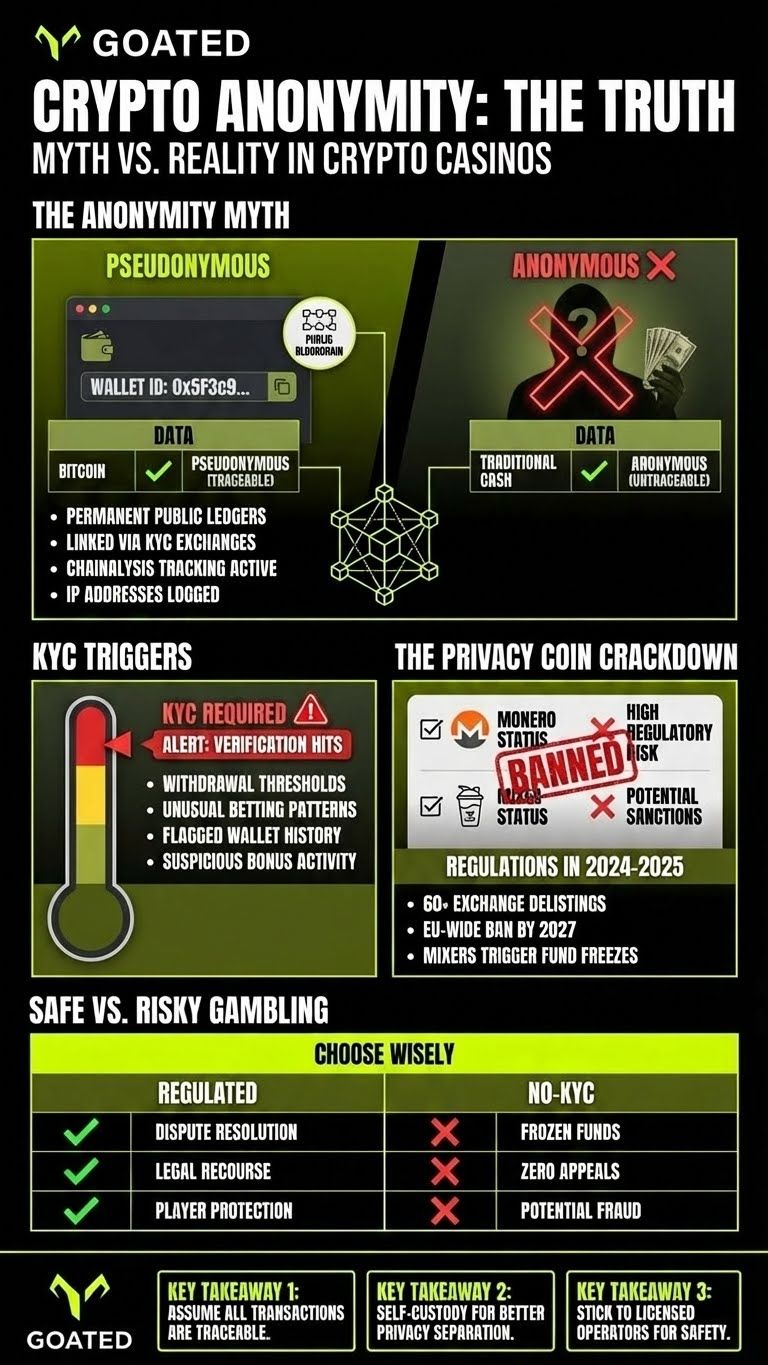
Yes, crypto gambling transactions can be traced. Public blockchains create permanent, transparent records of every transaction. While wallet addresses don't display names, they become linked to real identities when those addresses interact with regulated exchanges or fiat on-ramps.
According to industry research, the majority of Bitcoin transactions can be traced back to individuals when connected to services requiring identification. Blockchain forensics companies like Chainalysis are used by casinos, law enforcement, and regulators worldwide to track fund movements and identify suspicious activity.
Key factors that increase traceability:
- Using the same wallet address across multiple platforms
- Depositing from exchange-linked wallets
- Withdrawing to exchanges that require KYC
- Transaction patterns that match known wallet clusters
Do crypto casinos require KYC verification?
Most crypto casinos require KYC verification at some point, typically before withdrawals rather than deposits. Many platforms allow you to deposit and play without immediate identity checks, but withdrawals are different.
Common KYC triggers at crypto casinos:
- Withdrawals exceeding threshold amounts
- Unusual betting patterns or account activity
- Suspected bonus abuse or fraud
- Funds arriving from flagged or high-risk wallet addresses
- Requests for large payouts after minimal play
Even "no-KYC" casinos often reserve the right to request verification. Sites advertising completely anonymous withdrawals typically operate with weak licenses and offer no player protection if disputes arise.
What happens if I use a no-KYC crypto casino?
No-KYC crypto casinos carry significant risks including frozen funds, blocked withdrawals, and no legal recourse if something goes wrong.
Risks of no-KYC casinos:
- Withdrawals may be blocked indefinitely without explanation
- No independent dispute resolution or appeals process
- Higher likelihood of encountering fraudulent operators
- Potential legal issues in jurisdictions where unlicensed gambling is prohibited
- No responsible gambling protections or self-exclusion tools
Many no-KYC platforms operate under permissive offshore licenses with minimal regulatory oversight. If the casino refuses to pay out or disappears, recovering funds is typically impossible.
Can I use Monero or privacy coins at crypto casinos?
Most regulated crypto casinos prohibit privacy coins and mixers. While privacy-focused cryptocurrencies like Monero use advanced cryptography (ring signatures, stealth addresses) to obscure transactions, they attract heavy regulatory scrutiny.
Current regulatory status of privacy coins (as of 2024-2025):
- Nearly 60 exchange delistings in 2024, with Monero facing the most removals
- EU regulations will effectively ban privacy coin trading by 2027
- Japan and South Korea already prohibit privacy coins on domestic exchanges
- Binance and Kraken have restricted Monero for users in multiple jurisdictions
Why casinos ban privacy coins:
- Anti-money laundering (AML) compliance requirements
- Inability to verify fund sources
- Regulatory pressure from licensing authorities
- Risk of processing illicit funds
Mixing services like Tornado Cash have faced sanctions and criminal prosecutions. Using mixers may trigger fund freezes, enhanced scrutiny, or legal complications.
Are Bitcoin transactions anonymous at crypto casinos?
Bitcoin transactions are pseudonymous, not anonymous. Every Bitcoin transaction is recorded on a public ledger visible to anyone. While your wallet address isn't directly linked to your name, the connection can be established through:
- Exchange account records (if you purchased Bitcoin with KYC)
- Blockchain analysis linking transaction patterns
- Casino records connecting deposits to account activity
- IP address logging during transactions
Bitcoin offers more privacy than traditional banking but significantly less than many users assume. Treat all Bitcoin gambling transactions as potentially traceable.
How to gamble with cryptocurrency more privately
If privacy matters, take these precautions while staying legal:
- Verify legality first — Confirm crypto gambling is legal in your jurisdiction before playing.
- Use self-custodied wallets — Deposit from non-custodial wallets rather than directly from exchanges to create separation between your verified identity and gambling activity.
- Read casino terms carefully — Understand KYC triggers, withdrawal limits, and which cryptocurrencies are accepted before depositing.
- Choose licensed operators — Regulated casinos offer dispute resolution and player protections that anonymous sites cannot provide.
- Keep records — Document deposits and withdrawals for tax compliance and potential disputes.
- Avoid mixers and privacy coins — These may trigger enhanced scrutiny, fund freezes, or legal issues at most platforms.
Frequently Asked Questions
Is Bitcoin gambling anonymous?
No. Bitcoin gambling is pseudonymous, not anonymous. All transactions are recorded on a public blockchain and can be traced using forensic analysis tools like Chainalysis.
Can casinos see my crypto wallet history?
Yes. Casinos can view your wallet's transaction history on the blockchain and may use analytics services to assess risk before processing withdrawals.
Will I need to verify my identity to withdraw from a crypto casino?
Most likely, yes. While deposits may not require KYC, most crypto casinos require identity verification before processing significant withdrawals or when suspicious activity is detected.
Are no-KYC crypto casinos safe?
No-KYC casinos carry higher risks including frozen funds, no dispute resolution, and potential exposure to fraudulent operators. They offer convenience at the cost of player protection.
Can I use Monero at crypto casinos?
Most regulated casinos do not accept Monero or other privacy coins due to AML compliance requirements. Using privacy coins where accepted may trigger additional scrutiny.
What is the safest way to gamble with crypto?
Use licensed, regulated platforms that implement KYC/AML procedures. While this reduces anonymity, it provides dispute resolution, responsible gambling tools, and legal protections.
Key Takeaways
- Crypto casino transactions are traceable — Public blockchains create permanent records that can be linked to identities through exchanges and forensic analysis.
- KYC is standard practice — Most casinos require identity verification before large withdrawals, even if deposits are anonymous.
- No-KYC sites mean higher risk — Anonymous casinos offer no recourse if funds are frozen or disputes arise.
- Privacy coins face restrictions — Monero and similar coins are increasingly delisted from exchanges and prohibited by casinos.
- Assume transparency — Treat all crypto gambling transactions as traceable unless you fully understand both the technology and legal implications.